
There is no sustainable agriculture in Southern Libya without addressing energy. Frequent power outages and high operational energy costs are not mere inconveniences. They are a direct threat to farm productivity and farmer income stability, especially for small and medium-scale farms in remote areas.
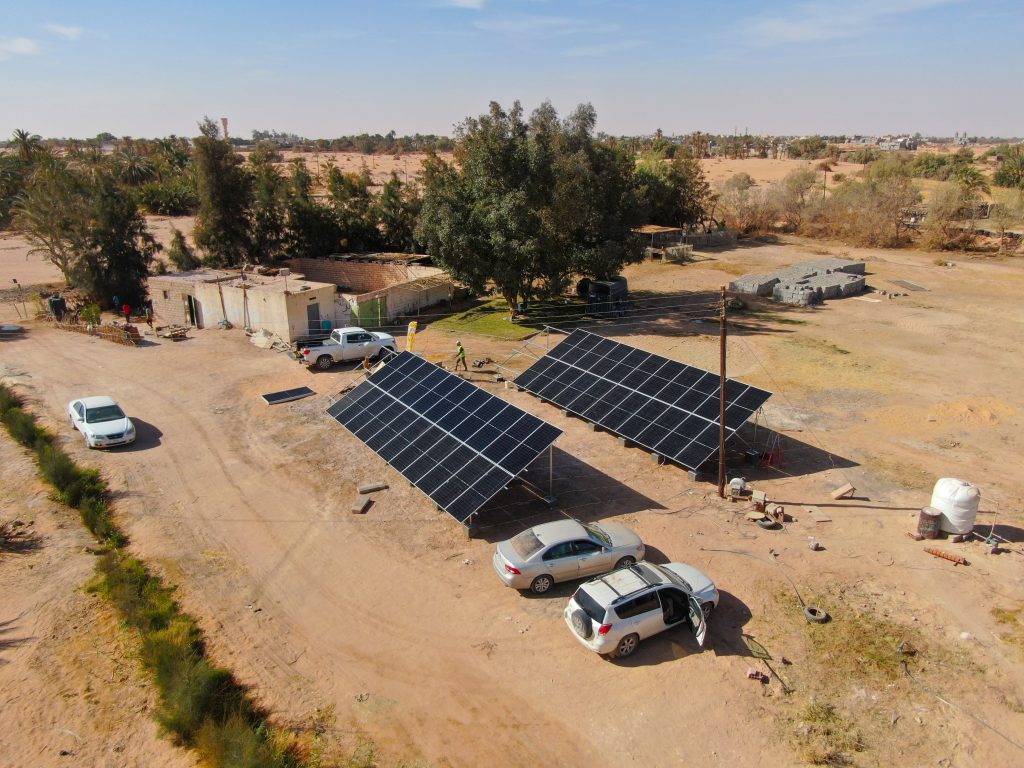
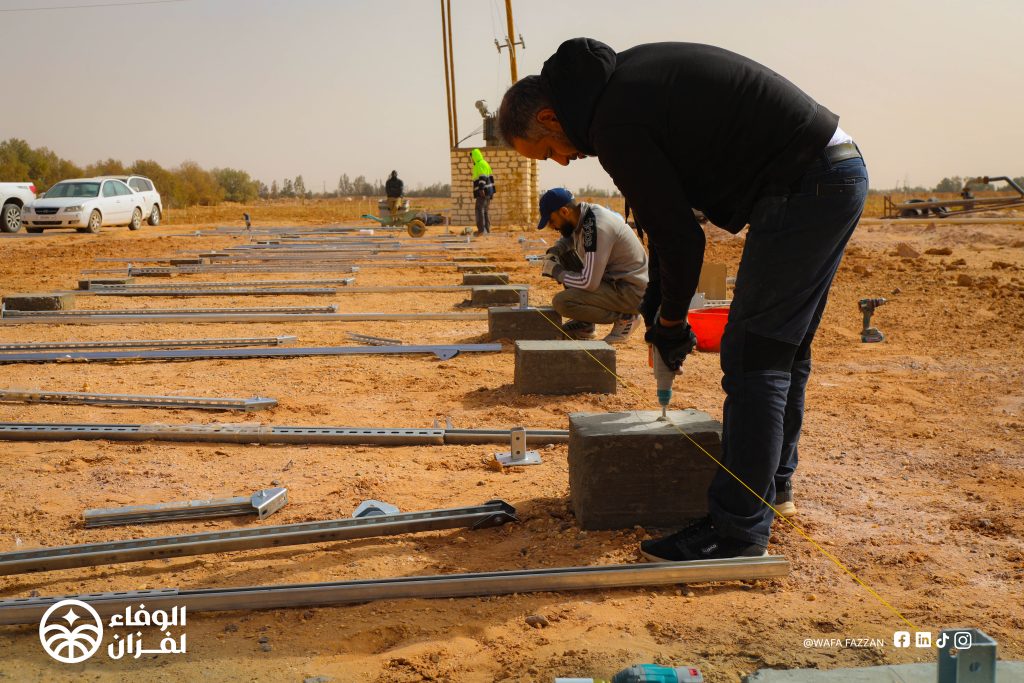
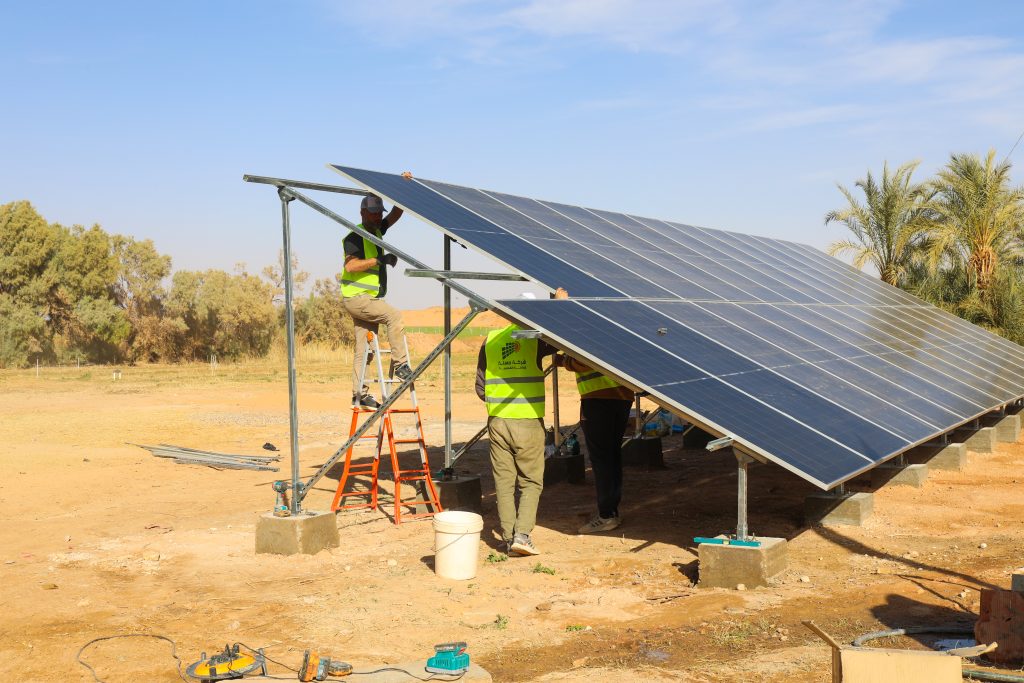
Under the sustainable agriculture and clean energy pillar of the Wafa Fazzan Project, solar energy systems were installed for more than 6 farms in the Al-Bawanis area. The installations were carried out by Mesla Company in accordance with approved technical specifications, with full documentation of every stage, from initial site assessment to final commissioning, to ensure transparency, quality, and accountability.
How Were the Farms Selected?
The selection was not random. It was conducted through a structured assessment process on KoboToolbox, based on clearly defined criteria:
- The farm must be located within the Fezzan region with active and ongoing agricultural production
- Demonstrated vulnerability to frequent power outages or insufficient electricity supply
- Limited financial capacity to independently invest in renewable energy systems
- The farmer’s commitment to maintaining the system and using it exclusively for agricultural purposes
That last criterion matters. The goal is not just to install solar panels, but to ensure their impact lasts over the long term. Farms that demonstrated a genuine willingness to maintain the installed systems were given priority.
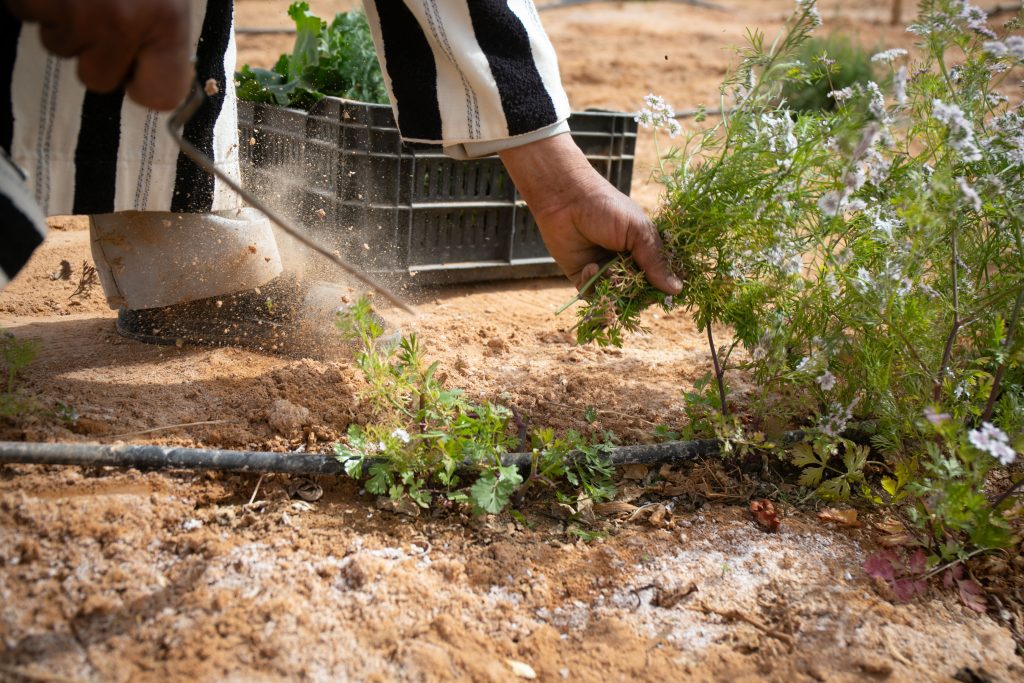
The result: farms now operating with more reliable energy, lower operational costs, and a better ability to maintain consistent production cycles. That translates to greater income stability and stronger resilience against economic challenges.