
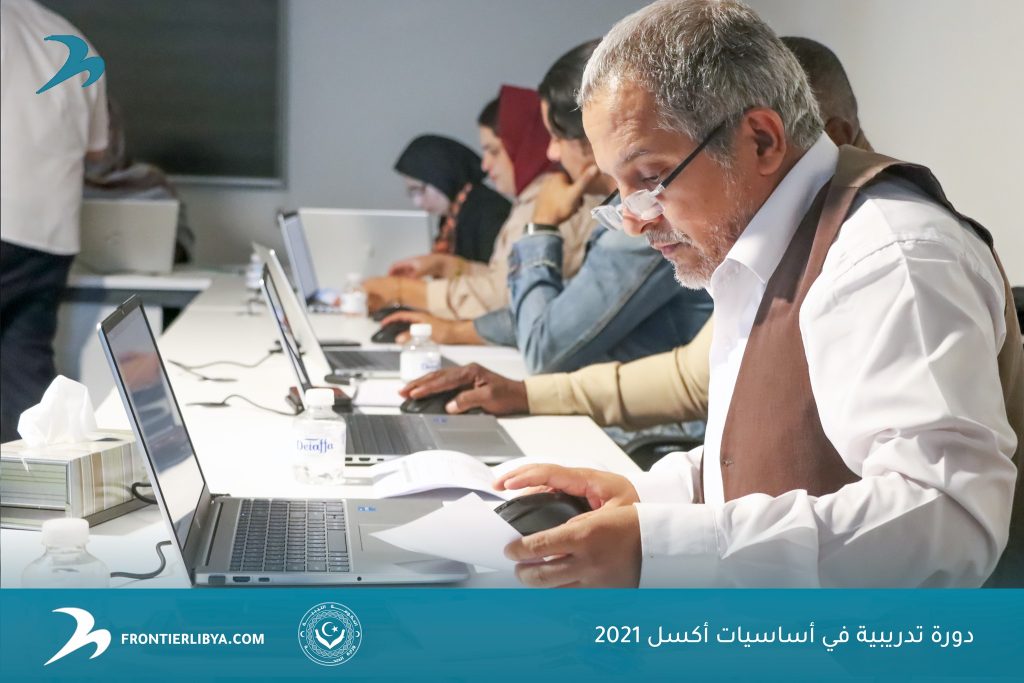
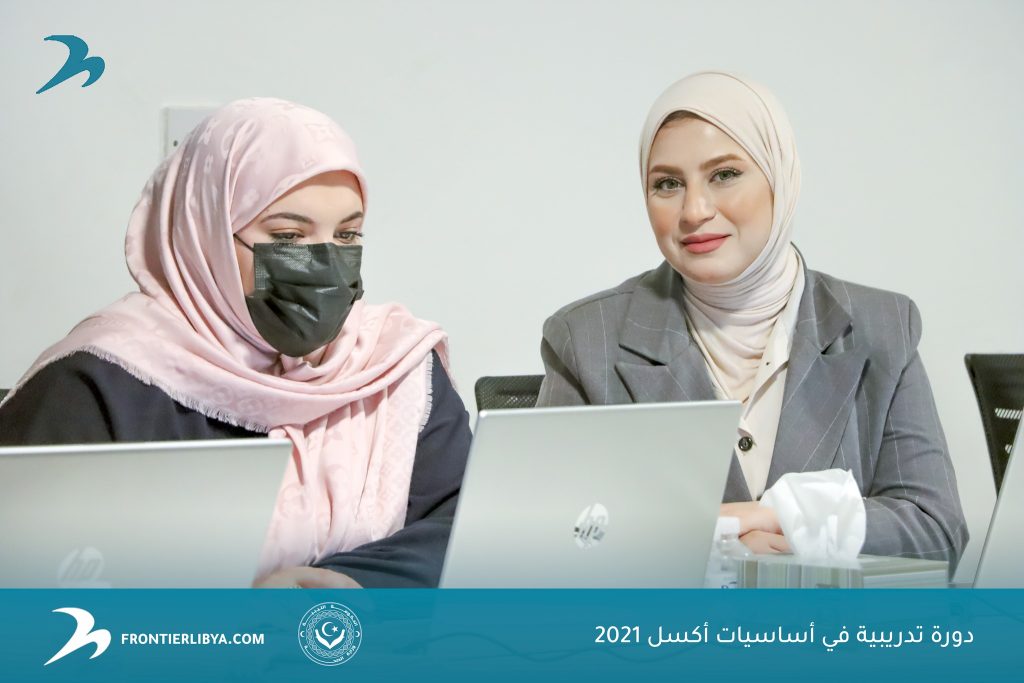
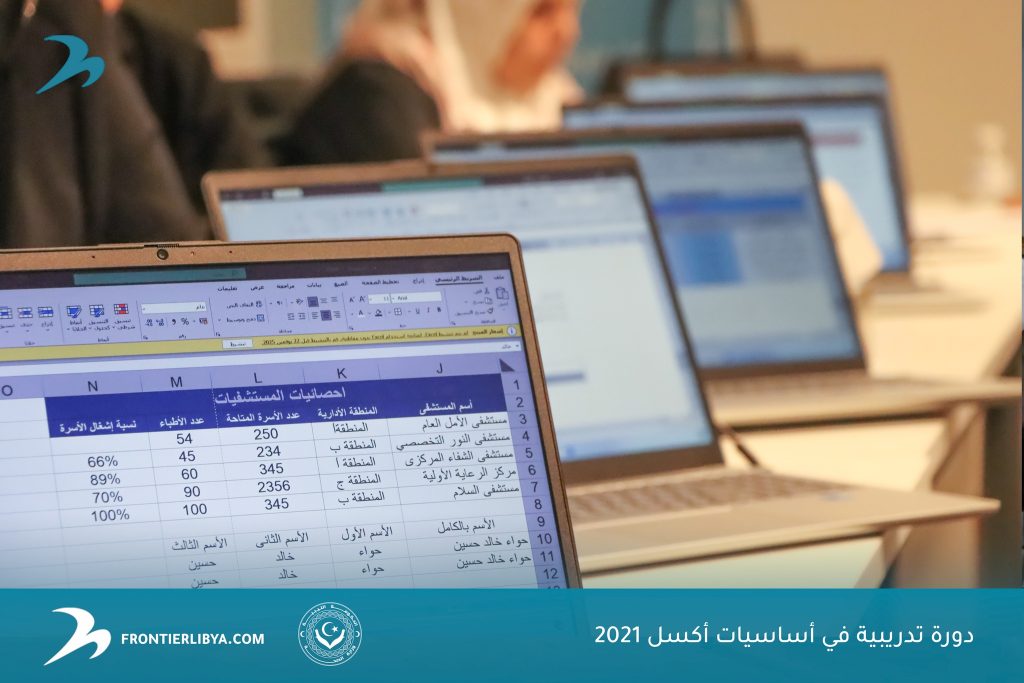
In November 2025, Afaaq Libya for Training and Consultancy implemented the “Excel for Beginners” program for employees of the Ministry of Health. The five-day program brought together 11 participants from various departments, including Financial Affairs, Laboratories, Public Relations, Human Resources, Hospital Administration, and the Office of the Minister. The program aimed to enhance digital competency and strengthen practical Excel skills in a way that directly improves administrative and financial performance within the Ministry.


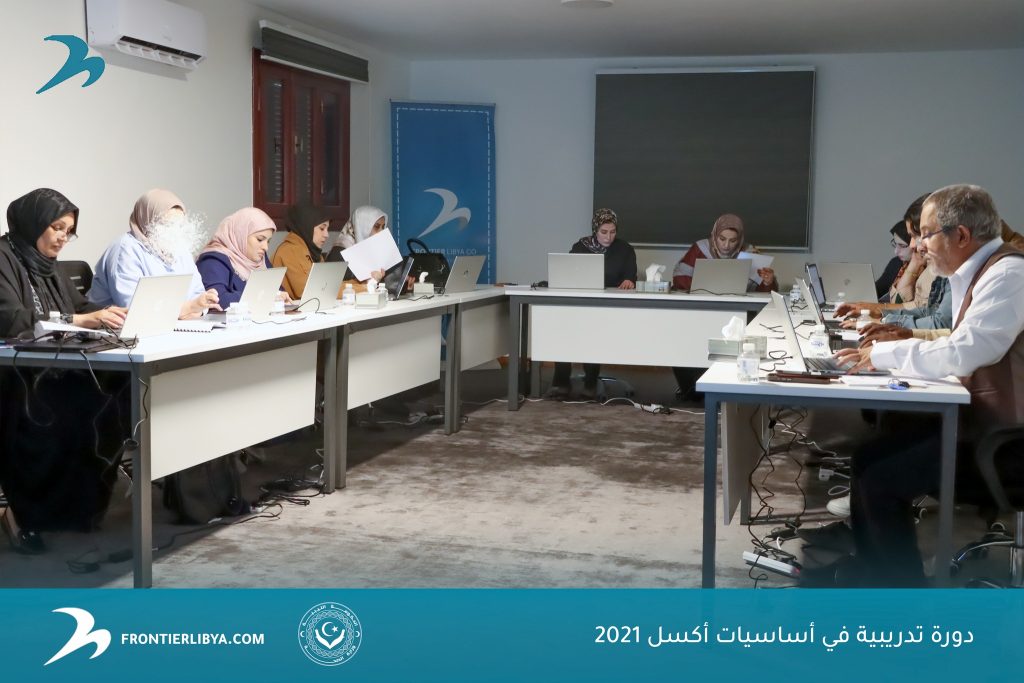
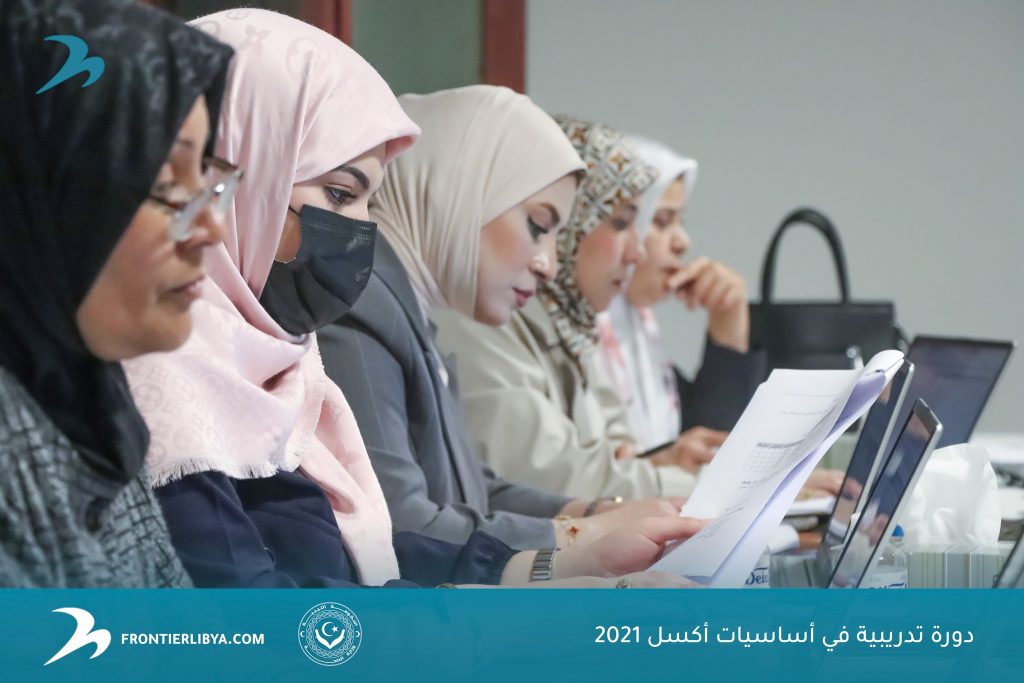
The program was designed to include 15 training hours, of which 13.73 hours were effectively delivered, achieving an overall commitment rate of 92%. This reflects a high level of seriousness and discipline among participants. Eight trainees achieved full attendance, while a limited number recorded lower participation rates, without affecting the overall strong commitment level.
Analysis of the pre- and post-training assessments demonstrated a substantial improvement in knowledge and practical skills. The average score increased from 46.36% before the training to 85.45% after its completion, with an overall improvement rate of 39.09%. These indicators confirm the program’s clear positive impact, particularly for participants with initially lower skill levels, who recorded the highest rates of development.

The average final examination score reached 84.27%, with outstanding results of up to 99%, reflecting strong mastery of the scientific and practical content among the majority of participants. The final evaluation results showed that 100% of participants acquired new skills and recommended the course to their colleagues, demonstrating full satisfaction and high confidence in the program’s quality.
The scientific content and course objectives received an excellent evaluation, with strong appreciation for clarity of presentation, logical sequencing of topics, and the variety of practical activities. The trainer’s performance was rated 100% excellent across all criteria, reflecting a high level of professionalism in delivery. The training environment and administrative organization were also rated very highly, with only minor observations related to time allocation and lighting, indicating opportunities for further enhancement.

Strategic Recommendations
Based on the quantitative and qualitative evaluation results, the following recommendations are proposed:
- Establish a sustainable national pathway for digital competency development, beginning with Excel and progressing toward advanced data analysis and smart reporting systems.
- Link participation in training programs to clear performance indicators to ensure measurable institutional impact.
- Adopt the program as a reference training model and gradually expand it across departments and health facilities.
- Prioritize training resources for employees with lower baseline skill levels to maximize improvement outcomes.
- Implement a “learning by doing” approach to ensure immediate practical application of acquired skills.
- Introduce a formal post-training follow-up mechanism to measure performance impact and determine future training needs.
- Support official staff release time during training periods to maximize attendance and effectiveness.
- Use updated job descriptions as the primary reference for identifying training needs and selecting participants.
Through its measurable results and high participant satisfaction, the program confirms the success of an institutional capacity-building model based on assessment, analysis, and continuous development, reinforcing the Ministry of Health’s administrative modernization and digital transformation efforts.